Pea Protein vs Hemp Protein
A side-by-side look at two common plant-protein ingredients and why many powders combine them.
Plant Protein Path is independent. Some product links may earn us a commission at no extra cost to you. We do not claim to have personally tested products unless explicitly stated.
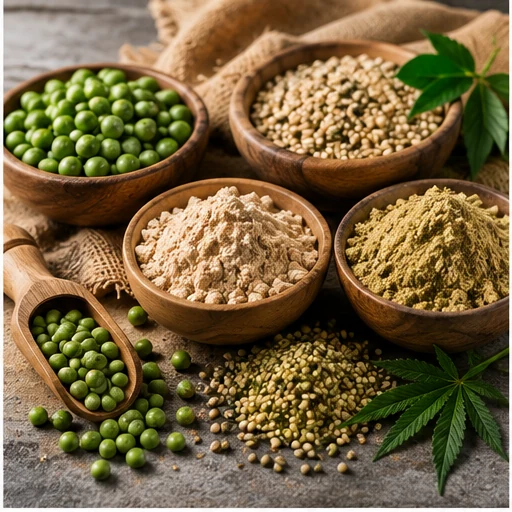
Pea protein powders are often more protein-dense because of how the ingredient is processed. Hemp protein products may retain more fiber and fat depending on processing.
What matters most
- Pea protein powders are often more protein-dense because of how the ingredient is processed.
- Hemp protein products may retain more fiber and fat depending on processing.
- Blending sources can change flavor, texture and amino-acid composition.
How to use this information
Protein-powder decisions are easier when you separate the basic nutrition question from the marketing. Start with your overall eating pattern, then decide whether a supplement solves a real convenience or dietary-fit problem. Once a powder is useful, compare the label rather than relying on front-of-pack superlatives.
- Compare labels rather than raw ingredients in isolation.
- For shakes, consider texture and taste alongside nutrition.
- For complete dietary protein, think about your full day's food pattern.
Label-reading checklist
| Check | Why it matters |
|---|---|
| Protein per serving | Lets you compare products on the nutrient you are primarily buying. |
| Serving size | Prevents misleading comparisons between unusually small or large scoops. |
| Protein sources | Helps with dietary preference, allergens, taste and amino-acid considerations. |
| Other ingredients | Shows sweeteners, flavors, gums, micronutrients and other additions. |
| Cost per serving | More useful than container price when pack sizes differ. |
Next: compare plant protein powders
Use a label-first buying guide before choosing a product.
See the buying guideHealth and nutrition context
Protein is an essential nutrient used throughout the body. Needs vary by age, health and activity level. Public-health sources also emphasize that protein can come from a range of plant and animal foods, and that a varied eating pattern matters. This site does not provide personalized medical nutrition advice.