Dairy-Free and Soy-Free Plant Protein Powder: How to Choose
A dairy-free, soy-free label can narrow the shelf quickly—but it is still worth checking the full formula, allergen statement and how much protein you actually get.
Disclosure: Plant Protein Path is independent. Some product links may earn us a commission at no extra cost to you. We do not claim to have personally tested products unless explicitly stated.
If you need a protein powder that is both dairy-free and soy-free, start by confirming the actual allergen and ingredient statements on the current label. Then compare protein source, protein per serving, sweeteners, fortification, testing and price. Do not assume every plant-based powder is automatically soy-free.
What to check on a dairy-free, soy-free protein label
| Check | Why it matters |
|---|---|
| Protein source | Pea, hemp, rice and seed proteins are common non-dairy options, but formulas can blend several sources. |
| Allergen statement | Plant-based does not automatically mean free from soy or every other allergen. |
| Cross-contact information | If you have a diagnosed food allergy, manufacturing and cross-contact statements can matter as much as the main ingredient list. |
| Other ingredients | Check sweeteners, gums, flavors, added fiber and micronutrients rather than judging only the protein source. |
| Protein per serving | Compare products on the amount of protein you actually receive per serving. |
Where LiveGood fits
LiveGood's current merchant page labels its Complete Plant-Based Protein as vegan, dairy-free and soy-free and describes the protein sources as organic pea and organic hemp. The merchant also states 20 g of protein per serving and 26 vitamins/minerals.
Those are merchant claims, not our own laboratory findings. If dairy or soy avoidance is medically important, verify the current package and allergen statement before purchase and discuss severe allergies with an appropriate clinician.
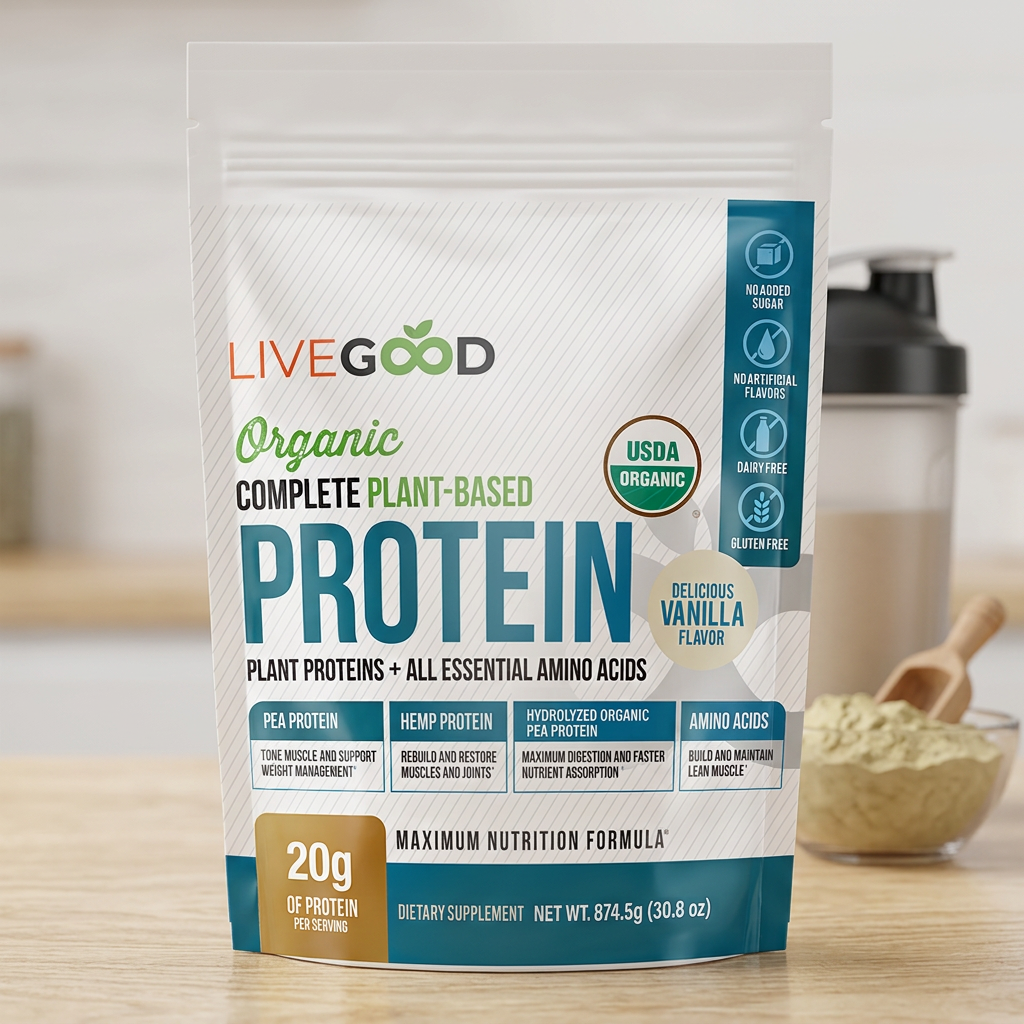
LiveGood Complete Plant-Based Protein
Current merchant positioning: vegan, dairy-free, soy-free, organic pea + hemp protein and 20 g protein per serving.
See Current LiveGood DetailsOther plant-protein approaches
You do not need to choose a fortified pea + hemp formula. Depending on your priorities, you may also compare simple pea protein powders, hemp-forward powders, rice blends and other multi-source plant proteins. Our plant protein shortlist and pea protein guide are useful next steps.
Do not rely on front-label wording alone
Marketing terms such as "plant based," "vegan" and "clean" do not replace the ingredient and allergen statements. If your avoidance is preference-based, the choice may be straightforward. If it is allergy-related, use the current label and manufacturer information rather than an old article or product image.
Sources
- LiveGood: Complete Plant-Based Protein — current merchant product and dietary-fit claims.
- FDA: Food Allergies — general allergen-labeling context.
Product facts reviewed August 2026. Formulas and allergen statements can change; check the current package before purchase.